
How to Fix Sticky Bis Bb Key Pad on Saxophone
· Rulon Brown

Jump to
How to Fix a Sticky Bis Bb Key Pad on Saxophone
Few things disrupt a saxophone player’s performance faster than a sticky Bis B flat key pad on saxophone. You are playing a fast passage, release the Bis key and the key hesitates or sticks completely closed give you the wrong note pitch! If you are struggling with a sticky Bis Bb key pad on saxophone, this step-by-step guide will help you troubleshoot the cause, treat the immediate symptoms, and prevent sticky saxophone Bis B Flat keys from returning.
Is Mechanical Damage Causing Your Bis Bb Key to Stick?
Before assuming the pad itself is dirty, you must first rule out mechanical binding or physical damage to the key mechanism.
Has your saxophone been dropped or bumped hard recently? If so, the body tube or key posts may be slightly bent. Even a micro-alignment shift can cause key mechanisms to bind against each other, creating an action that feels like a sticky Bis Bb key pad on saxophone.
Next, inspect the key mechanism lubrication. When was the last time you oiled your keys? If you add a drop of quality key oil to the Bis B flat key mechanism and it suddenly operates freely without sticking, grit or dried lubricant was likely interfering with the key rod. If key oil resolves the issue temporarily, consider bringing your instrument to a professional repair technician for a full clean, oil, and adjustment (COA) to keep all your keys working smoothly.
Why the Bis Bb Key Often Becomes Sticky
If your key mechanism moves freely but the pad sticks to the tone hole, you are dealing with pad residue. To fix a sticky Bis Bb key pad on saxophone long-term, it helps to understand why this specific key can become sticky.
The Bis Bb key is designed to have light spring tension because it operates below the C key tension. If your Bis key had strong key tension like the other main keys, your C key would feel extra stiff fighting both the C and Bis key springs. This mechanical tradeoff means Bis Bb has less spring tension to lift it off a sticky tone hole.
Sticky keys are caused by bacteria, yeast, and saliva residue building up on the tone hole and pad leather. This buildup accumulates heavily near the top of the saxophone neck and upper stack. When the horn is stored in its case with a standard end plug, moisture gets trapped inside the upper tube. When you play, that trapped moisture and gunk drips directly down onto the upper stack left-hand keys. Because the Bis Bb key operates under relatively light spring tension, even a small amount of bacteria and moisture build-up can cause the Bis pad to stick shut.
How to Clean a Sticky Saxophone Pad Naturally
When treating an active sticky Bis Bb key pad on saxophone, avoid using harsh chemicals, powders, or powder paper that leaves additional residue behind. The added powder gives bacteria, yeast, and fungus added matrix to grow in.
Using a dedicated microfiber pad dryer—such as the Spit Sponge™ Pad Dryer—allows you to absorb trapped moisture and clean dirty residue directly from the tone hole and pad face. Place the pad dryer between the pad and the tone hole, gently close the key, and pull the material through to wipe away surface gunk. Cleaning the tone hole provides immediate relief for the symptom, but preventing the moisture buildup at the top of the horn is the true cure.
How to Prevent Sticky Saxophone Keys Forever
The ultimate fix for a sticky Bis Bb key pad on saxophone is eliminating the dark, humid environment inside the upper part of the saxophone body where bacteria and yeast thrive.
-
Swab the Sax After Every Play Session: Always pass a swab through the body tube and neck to remove pooled moisture before putting your saxophone away.

-
Leave Closed Keys Open to Air-Dry: Use a key prop device like the Key Leaves Vent Vine™ to open all closed palm keys from High D up. Opening these keys allows healthy airflow through the upper tone holes so pads air-dry quickly rather than rot in trapped humidity.

-
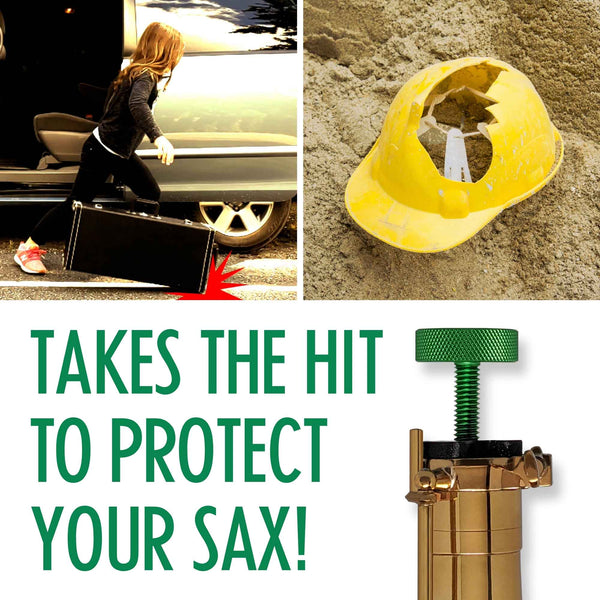
Use a Venting End Cap: Replace standard solid end plugs with a breathable cap like the Key Leaves GapCap™. A vented cap allows air to circulate through the top of the sax body while providing structural protection against accidental bumps and impact damage.

Saxophone players who swab consistently and use key venting products report that sticky Bis Bb keys completely disappear because the root cause—trapped bacteria filled moisture—is eliminated.
Frequently Asked Questions About a Sticky Bis Bb Key Pad on Saxophone
Why is my Bis Bb key sticking on my saxophone?
The Bis Bb key usually sticks due to a combination of light spring tension and moisture accumulation. Saliva, yeast, and sugar buildup settle in the upper stack tone holes, causing the leather pad to stick to the tone hole rim when closed.
How do you clean sticky saxophone keys?
Clean sticky keys by inserting a washable microfiber pad dryer between the pad and tone hole to absorb moisture and wipe away gunk. To stop keys from sticking in the future, use key props after playing to allow pads to air-dry completely.
Will key oil fix a sticky Bis Bb pad?
Key oil will fix key sluggishness if the issue is inside the mechanical hinge rod, but key oil will not fix a sticky pad leather surface. Never apply key oil to pad leather or tone holes, as oil attracts dirt and worsens pad stickiness over time.
We hope this guide on how to fix a sticky Bis Bb key pad on saxophone has been helpful!
Learn More
Protect your saxophone pads and keep your instrument playing at its absolute best:
Shop this guide



Vent Vine™ - Custom Fit
Sale price:
$45.00
Regular price:
$50.00

GapCap® saxophone end cap
From $44.99


