
How To Stop Sticky Soprano Sax Keys
· Key Leaves Customer Support

Jump to
The soprano saxophone is an incredible instrument. It is thrilling to play and can sound warm, screamin', or crystalline. But every soprano sax player eventually runs into a major frustration: sticky soprano sax keys. The soprano sax G# key pad is notoriously sticky, and the Low C# and Low Eb keys are equally prone to sticking shut right when you need to play a fast passage. If you are struggling with sticky soprano sax keys, this guide will explain why this happens and give you a proven step-by-step strategy to stop sticky saxophone keys for good.
Why Do Soprano Sax Keys Stick So Much?
To prevent sticky soprano sax keys, you first need to understand why the soprano horn suffers more from pad stickiness than larger saxophones:
- Less Frequent Play Time: Soprano saxophone is often a secondary horn for players. Because it is played less frequently than alto or tenor, it sits in its case longer, giving trapped moisture and saliva gunk time to rot pad leather.
- Narrow Body Bore: The body tube on a soprano sax is significantly smaller, trapping condensation easily. If you want perspective on how a small bore causes sticky pads, just ask an oboe player! Proper soprano sax pad care is critical due to this tight space.
- The "Doubler" Dilemma: Soprano sax is commonly used as a "doubler" instrument on stage. A musician plays it aggressively for a few minutes, sets it back on a sax stand wet, and switches back to another horn. That rapid cooling of trapped saliva is a classic recipe for sticky pads.
- Normally-Closed Pad Design: Like all saxophones, the soprano sax G# key, Low C#, and Low Eb keys are designed to rest closed against their tone holes. When you put a wet horn in its case, these closed pads trap moisture against the tone hole rim, causing bacteria, yeast, and saliva sugars to glue the leather shut. Learn more about pad rot science here.
How Do You Stop Sticky Keys on Your Soprano Sax?
Stopping sticky soprano sax keys requires eliminating trapped moisture and allowing air to circulate through closed tone holes after every play session. Follow these essential habits:
1. Swab Your Horn Immediately After Playing
Always use a quality soprano sax swab to pull moisture out of the body tube and neck after every session. Always! Swabbing removes the bulk liquid before it can settle into your upper and lower stack tone holes.
2. Leave Closed Keys Open to Air-Dry
Swabbing alone cannot remove moisture trapped under closed pad leather. Place a Key Leaves Soprano Sax Key Prop under the Low C# and Low Eb key arms after you play. This opens the Eb, C#, and soprano sax G# key pads simultaneously so they can air-dry naturally. It takes only seconds to install but is proven to prevent sticky saxophone keys.
If your soprano saxophone is very old it may not have left pinky keys that operate like modern saxophones. If that's the situation we recommend using a Vintage Soprano Sax key prop to open the G# pad to air dry.
3. Protect Your Horn From Temperature Extremes
Store your soprano sax at room temperature whenever possible. Avoiding drastic temperature and humidity fluctuations protects pad leather, prevents metal corrosion, and slows down the breakdown of tone hole seals, making long-term soprano sax pad care much easier.
How to Clean a Sticky Soprano Sax Pad Naturally
When dealing with active sticky soprano sax keys, avoid using powders or powdery paper. Powder provides a physical matrix that feeds yeast, bacteria, and fungus, making key stickiness worse over time.
Instead, use a washable, micro-thin pad dryer between the pad and tone hole. Gently press the key closed onto the material and pull it through to wipe away accumulated spit, sugar, and dirt. Cleaning the tone hole provides immediate relief, while using key props post-play provides the long-term cure.
Frequently Asked Questions About Sticky Soprano Sax Keys
Why does my soprano sax G# key keep sticking shut?
The soprano sax G# key stays closed under spring tension when the horn is not in use. Saliva and sugar buildup settle on the tone hole rim, gluing the leather pad shut. Opening the key with a key prop after playing allows the pad to air-dry and prevents stickiness.
How do you clean sticky saxophone keys safely?
Clean sticky saxophone keys using a clean microfiber pad dryer or un-powdered paper. Avoid chemical cleaners, lighter fluid, or powder, as these damage delicate pad leather and attract dirt.
Can key oil fix a sticky soprano sax key?
Key oil only helps if the mechanical hinge rod is binding due to friction or dirt. Key oil should never be applied to pad leather or tone hole rims, as oil will ruin the pad seal and make sticky soprano sax keys worse.
What If the Soprano Sax Pad Keeps Sticking?

If you have swabbed, used key props, and cleaned the tone hole, but your pads continue to stick, your pad leather may be old, torn, or deteriorating. Find a trusted band instrument repair tech near you and follow their advice. All sax pads eventually wear out, and a great technician can adjust your key mechanics so you sound your best.
We hope this guide on how to stop sticky soprano sax keys has been helpful!
Learn More
Take your saxophone care to the next level with these resources:
Shop this guide


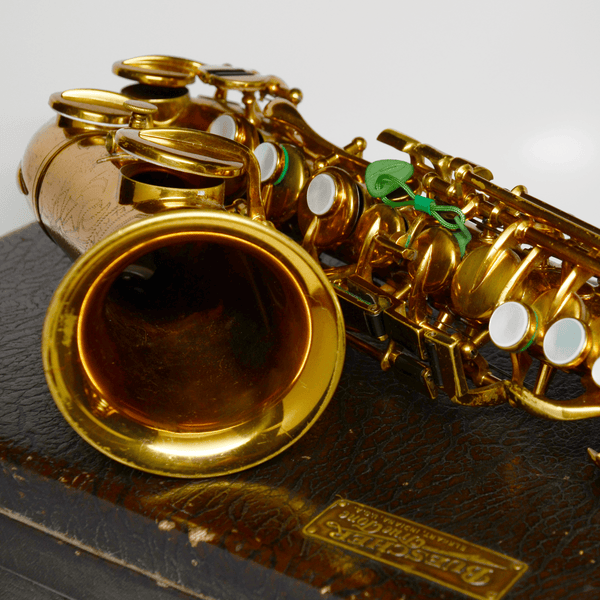
Vintage Soprano Sax Un-Tabbed G# Prop
$19.99